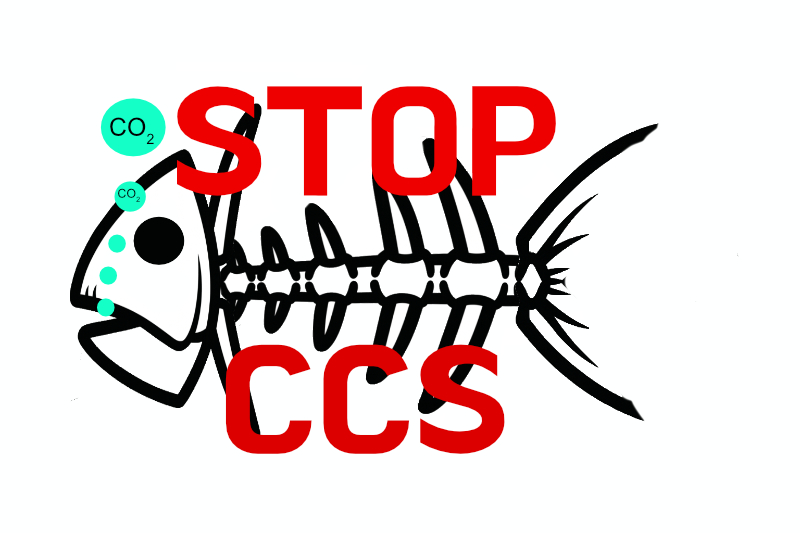
I recently wrote to my local MP, Angela Eagle, in jun 2025 about the Liverpool Bay Carbon Capture and Storage (CCS) project.
It wasn’t a casual email. It set out specific, technical concerns about injecting vast quantities of industrial CO₂ — including known toxic impurities — beneath one of the most environmentally sensitive marine areas in the UK, shared with Ireland and vital to fisheries, wildlife, and coastal communities.
I asked four straightforward things:
- Would she raise the issue in Parliament?
- Would she push for an independent environmental review?
- Would she confirm whether Ireland had been formally consulted under international law?
- Would she demand transparency on chemical impurities and long-term geological risk?
What came back was… familiar.
The Art of the Non-Answer
The reply began with a thank-you for my interest.
Not my concerns.
Not the evidence.
Just my interest — the political equivalent of patting someone on the head while gently backing toward the exit.
What followed was a perfectly polished summary of government climate policy. Net zero commitments. Innovation. Regulation. Jobs. Progress. The greatest hits album.
What it did not contain was any engagement with the questions actually asked.
No mention of chemical impurities.
No mention of long-term liability.
No mention of Ireland.
No mention of parliamentary scrutiny.
Just reassurance. Lots of it.
Confidence Without Detail
We are told the project is well regulated.
That experts are involved.
That safeguards exist.
All of which may be true — but none of which answers the basic question local residents are entitled to ask:
What exactly is being injected beneath our coastline, and what happens if the modelling is wrong?
On that point, the letter was silent.
A Pattern, Not a Slip
This wasn’t an unfortunate oversight. It was a pattern.
When major infrastructure projects are already politically committed, public consultation becomes less about challenge and more about process. Responses are issued. Boxes are ticked. The appearance of engagement is maintained.
Actual scrutiny, however, is quietly sidestepped.
Why This Matters Locally
Liverpool Bay is not an abstract policy zone. It borders protected estuaries, supports fishing livelihoods, and underpins local tourism and ecology. If something goes wrong underground, it won’t be corrected by a future press release — and it certainly won’t be reversible.
Yet the message coming back to residents is effectively this:
The decision is made. Trust us.
That may be enough for Westminster spreadsheets. It is not enough for people who live here.
Still Waiting
I remain willing — and able — to provide technical material, briefings, and evidence. I would welcome a meeting or even a proper written response that addresses the substance rather than the slogans.
Until then, local residents are entitled to ask a simple question:
If this project is as safe, transparent, and proven as claimed — why do our questions keep going unanswered?