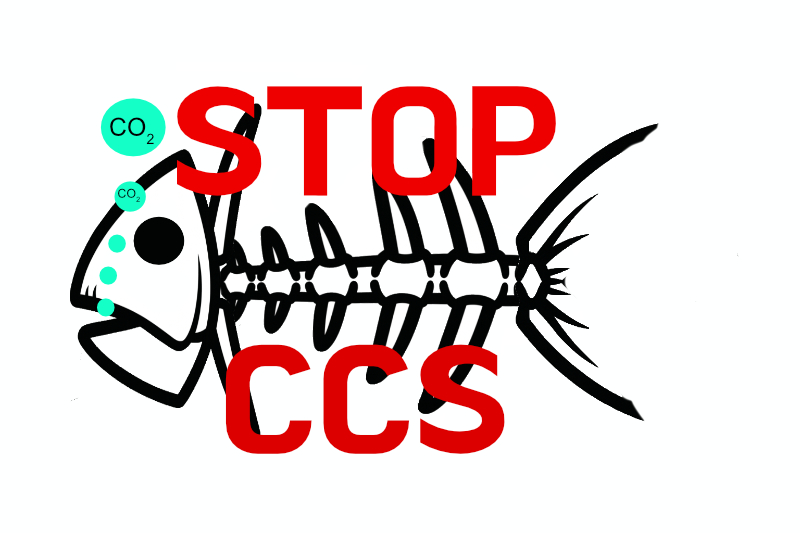
he UK Govs £2 billion- science experiment, what could possibly go wrong
ALL though this is written with some humour, this is not a joke, please take a few minutes to read as this is really important. Everyone in the North West of the UK should be concerned and take action
🧪 Liverpool Bay: Britain’s Largest Chemistry Set (With No Off Switch)
Imagine if your child came home from school and said: “We’re going to inject acid under the kitchen floor, forever. It’s for science, Mum.”
Now imagine the UK Government said the same thing—except instead of your kitchen, it’s the Irish Sea, and instead of a child, it’s ENI, an Italian oil giant being paid billions to do it.
Welcome to Liverpool Bay’s Carbon Capture and Storage (CCS) project—the biggest, boldest, and most chemically reckless experiment Britain has ever attempted outside of GCSE coursework with a Bunsen burner and blind optimism.
🧬 Acid Test, Literally
The plan is elegant in its madness: take impure carbon dioxide from industrial sites (think smokestack sweepings), which contains impurities such as hydrogen sulphide, mercury or other metals, nitrogen oxides, benzene, and the odd radioactive crumb, then shove it deep underground into an old gas field called Hamilton, in the Irish Sea.
This isn’t carbon capture. This is industrial fly-tipping with a chemistry degree.
And once it’s down there, it reacts. CO₂ and water make carbonic acid. Add hydrogen sulphide, and you’ve get sulphuric acid—the kind that laughs at limestone and eats through metal.
There’s a reason science teachers wear goggles.
🧨 What Could Possibly Go Wrong?
Let’s recap the ingredients:
- 130 million tonnes of gas pumped over 25 years
- A shallow, coastal sandstone reservoir
- Legacy gas wells (some possibly forgotten chemicals still down there)
- No clearly published binding limits on impurities like mercury or volatile organics
- Near-zero public transparency
- And the small matter of… forever.
Once inside, this chemical cocktail could:
- Dissolve the rock it’s meant to stay inside
- Weaken the caprock (the “lid” keeping it from surfacing)
- Trigger more micro-earthquakes, opening cracks
- Mobilise heavy metals into aquifers and ecosystems
- Leak into protected marine zones, where birds, fish, and humans rely on a delicate pH balance not typically enhanced by acid and mercury
The scientific term for this is “completely mental.”
🐚 Marine Life: Now With Optional Acid Wash
The injection site squats beneath a menagerie of protected areas: shellfish nurseries, fish spawning zones, diving bird sanctuaries. All now at risk of exposure to CO₂, acidified brine, possible mobilised heavy metals, and the long-term memory of a government subsidy.
Even minor seepage—tiny fizzles (micro fracture) in the reused pipes, from old wells or geological fractures—could devastate habitats built over millennia. Mussels don’t grow back overnight.
One marine biologist described it as “giving an ulcer to the ocean.”
Imaging waking up one, going for a walk on the beach, to find thousands of dead fish floating – CO₂ the silent killer, ah actually you might now wake up.
🏛️ Untested, Unregulated, Unwise
This is the largest CCS project in UK history, and one of the largest globally in a shallow marine environment. And it’s being built on:
- Shallow offshore geology never tested at this scale
- No published long-term seismic hazard modelling
- No 100-year chemical interaction model made public
- Little evidence of meaningful Irish consultation, despite the Espoo Convention and shared waters
Just over £2 billion in public money is being spent to fund ENI
— the same operator behind a 2022 offshore oil spill that caused tar balls to wash up along the Lancashire coast. That incident raised serious concerns about detection delays, transparency, and slow emergency response — none of which inspire confidence for a 100-year chemistry experiment under the sea.
💸 A Climate Scam in a Lab Coat
CCS should be the last resort for hard-to-abate emissions. Instead, it’s being used as a get-out-of-jail-free card for polluters. Rather than stopping emissions, we’re bottling them, burying them, and praying the bottle holds.
On the 7th February, 2025, the UK governments Public accounts committee stated CCS is “unproven, first‑of‑a‑kind technology” posing high risk to consumers and taxpayers. The committee urged the government not to include CCUS in upcoming carbon budget delivery plans, to commission an independent scientific review, and ensure robust cost-benefit analysis before public funds are further committed
⚖️ Legal? Yes. Sensible? Absolutely Not.
We do not believe there has been a full public consultation. No transparent modelling. No independent geochemical review. No Irish input as far as I know . No marine NGO sign-off. No risk mitigation plan published, how do you deal with 130 million tonnes of toxic gas
Just circa 30-day notice was given in newspapers and a polite “trust us” from the Department for Energy. Did anyone see it? Surely a permanent solution deserves the people who live with it more than 30 days to consider it
Despite the shared waters, there’s little evidence of meaningful consultation with Irish authorities, that I can find. This means the Espoo Convention (yes, there is such a thing) is breached, there is the potential for UK–EU legal punch-ups, this looms like a subplot in a Nordic noir drama.
**The Espoo Convention requires countries to notify and consult with neighbouring states when a project could have environmental impacts across borders. In plain terms: if you’re doing something dodgy near a shared sea or river, you need to warn the neighbours before it leaks into their garden.
🧱 This is a Forever Problem
The UK Government has yet to explain how it would respond if things go wrong — 130 million tonnes of CO₂ ; Given the complexity, scale, and toxic mix involved, things going wrong isn’t a remote possibility, it’s a statistical inevitability.
- What happens if the Hamilton chamber begins to leak?
- Where would the 130 million tonnes of CO₂ be moved to?
- How would they even begin to evacuate a leaking geological formation?
- What contingency is in place if acidified brine or mobilised toxic metals find their way into the water table. You cant build a nuclear power station without these contingencies being in place before you start… why is this any different?
Particularly given the sensitive Site of Special Scientific Interest (SSSI) status around Liverpool Bay?
A sealed chamber of pressurised acid, metal ions, and industrial leftovers, gently stewing beneath the Irish Sea for the next century or more. The idea that we can just walk away and trust the rock to behave is laughable. This is a geological cancer — invisible, unpredictable, and irreversible.
Our governments, in moments of subsidy-fuelled brilliance, decided to store toxic legacy gases under some of the UK’s most sensitive marine habitats. It’ll be your grandchildren, bankrolling trillions in remediation schemes that make HS2 look like a Groupon deal. Picture them paying the ocean-cleanup taxes instead of university fees.
We banned plastic straws to save the turtles. Now we’re pumping CO₂ into their home.
🌍 Who’s Affected — and What’s at Risk
Everyone along the Irish Sea basin is a stakeholder in this risky chemical gamble. That includes communities in:
- North West England — Merseyside, the Wirral, Cumbria
- North Wales — coastal towns and estuaries
- Isle of Man — sitting just across from the proposed site
- Northern Ireland’s east coast — directly down current if things go wrong
And it’s not just people. All marine life in the surrounding waters stands to lose. Shellfish nurseries, fish spawning grounds, marine bird sanctuaries — all lie in the impact zone. I’m sure no reader wants the Irish sea to become the second dead sea
Let’s also not forget: the Irish sea was used as a dumping ground for over a million tonnes of unexploded munitions, thankfully most of these sites are a long way. The closest being Holyhead Deep, which contains WW-II explosives, chemical rounds and tens of thousands of radioactive luminous (DEFRA confirmed in 1997), 38 miles west of the Hamilton gas platform location. However not all dumping was properly documented or clearly labelled so their could be unexploded munitions within the area.
Now the government wants to run a high-pressure chemistry experiment right next door…. What could possibly go wrong? ☢️💨
The Irish Sea could become a slow-motion disaster zone. If CO₂, acidic brine or mobilised toxins breach containment, they don’t stop at county borders. Everyone who depends on this sea — for food, for economy, for ecology — becomes a bystander in a science experiment with no fire escape.
🧾 So, What Do We Want?
A pause and STOP. We dont want this here .
- We have a petition on its way, to ask the government to stop this.
- Once its approved I’ll post it here:
- Please share this blog so everyone can be made aware of this danger
- Write to you MP and Councillors make them aware as I doubt they will be.
- Sign up to the newsletter on the www.liverpoolbay.com
But mostly, we want someone in our government to admit that turning the Irish Sea into a CO₂ bath, or a sulphuric acid bath might be—just possibly—not a great idea.
This is not climate action. This is geoalchemy.
The North West of Britain deserves better than to be the world’s CCS test tube.